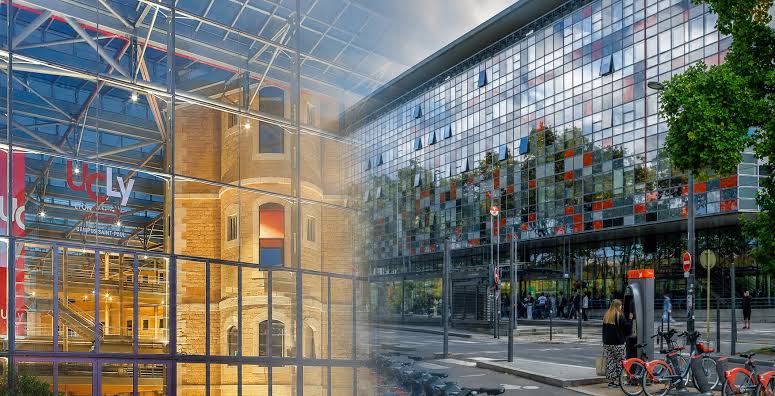
Leading the Erasmus+ Teaching Environmental Democracy project, the Université Catholique de Lyon brings its expertise in environmental law, European legal studies and international academic cooperation to an ambitious initiative aimed at transforming how students learn and experience democratic participation.
A European University Committed to Innovative Legal Education
How can universities equip future generations with the knowledge and skills needed to address environmental challenges while actively participating in democratic decision-making?
For the Université Catholique de Lyon (UCLy), this question lies at the intersection of two essential missions of higher education: providing rigorous academic knowledge and preparing students to become informed, responsible and engaged citizens.
Based in France, UCLy is the coordinating institution of T.E.D. – Teaching Environmental Democracy, a 36-month European cooperation project co-funded by the Erasmus+ programme. Bringing together four organisations from France, Italy and Greece, T.E.D. aims to develop an innovative educational model combining environmental law, interdisciplinary learning and deliberative democracy.
Recognised by the French Ministry of Education and part of the University of Lyon, UCLy welcomes approximately 12,500 students and offers a wide range of undergraduate, postgraduate and doctoral programmes.
With five faculties, six professional schools and a network of research and educational centres, the university promotes an interdisciplinary approach to teaching and research, connecting legal studies with social sciences, human rights, economics and other fields of knowledge.
This academic environment provides a foundation for the university’s participation in European initiatives addressing the relationship between law, society and contemporary global challenges.
Building on an Established Tradition in Environmental Law
At the heart of UCLy’s contribution to T.E.D. is the expertise developed within its Faculty of Law, particularly through the University Diploma in Environmental Law (Diplôme Universitaire en Droit de l’Environnement).
Directed by Dr Stefania Attolini, Lecturer in European Union Law and coordinator of the T.E.D. project, the programme combines legal education with practical activities designed to expose students to the realities of European and international environmental governance.
One of its distinctive features is the organisation of international moot court exercises, developed in cooperation with other European universities.
Through these activities, students examine concrete environmental cases, take on the roles of lawyers and judges, develop legal arguments and compare different approaches to environmental disputes.
The diploma also promotes direct engagement with European and international institutions.
Students have opportunities to participate in educational activities linked to the European Commission’s Green Week in Brussels, attend meetings with parliamentary representatives and visit international institutions in Geneva, including activities connected to the implementation of the Aarhus Convention.
These experiences bring environmental law beyond the classroom, allowing students to explore how legislation is interpreted, implemented and contested within institutional settings.
However, T.E.D. represents a further step in this educational approach.
While traditional legal training and moot court simulations help students understand the functioning of environmental institutions, the new project introduces an additional dimension: the opportunity to participate directly in democratic deliberation.
The objective is no longer simply to understand how environmental decisions are made, but also to experience the challenges involved in making them collectively.
Stefania Attolini and the Scientific Vision Behind T.E.D.
The coordination of T.E.D. is entrusted to Dr Stefania Attolini, whose academic work focuses on European Union law, environmental law, the green and digital transitions, and democratic instruments within the EU legal order.
As project coordinator, Attolini oversees the implementation of the partnership, chairs its Steering Committee and contributes directly to the development of the educational programme and its scientific content.
Her academic perspective reflects an important principle underlying T.E.D.: environmental democracy cannot be understood solely through legal procedures and institutional frameworks.
It also involves the ability to engage with disagreement, scientific uncertainty, competing interests and the difficult choices associated with environmental governance.
These questions were explored in her contribution to the Supranational Democracy Dialogues 2026, held in Brindisi, Italy, where she examined the tensions between the urgency of environmental action and the requirements of democratic participation.
Her intervention highlighted the need to move from a predominantly descriptive approach to environmental democracy towards educational methods that encourage critical reflection, collective deliberation and active citizenship.
This approach is central to the educational vision of T.E.D., which seeks to transform students from observers of democratic procedures into active participants in deliberative processes.
UCLy’s academic team also includes Dr Louis Bertier, researcher and lecturer in Public International Law and Academic Director of the Faculty of Law in Annecy.
His contribution is particularly important for developing the educational programme, integrating its activities into the university curriculum and supporting the academic framework of the pilot training.
Together with the university’s international relations and academic support services, the team combines scientific expertise, educational planning and institutional coordination.
Coordinating a Partnership Across Three European Countries
UCLy’s role extends beyond academic leadership.
As the project coordinator, the university is responsible for the overall management of T.E.D., including the coordination of activities, quality assurance, risk management and the monitoring of project progress.
The university chairs the Steering Committee, bringing together representatives of the four partner organisations and supporting a collaborative approach to decision-making and project implementation.
The partnership reflects the complementary expertise of its members.
The Università del Salento, in Italy, contributes its experience in European Union law, democratic governance and environmental studies, leading the development and implementation of the pilot training.
The Democracy and Culture Foundation – Athinaiki Agora, based in Greece, leads the methodological development of T.E.D., drawing on its expertise in participatory democracy and citizens’ assemblies.
CesUE – Centre for European Union Studies, in Italy, coordinates dissemination, communication and project outreach, supporting the visibility and wider transfer of the project’s educational outcomes.
Together, the four partners aim to develop a common European training programme that reflects different environmental, legal and socioeconomic contexts.
In particular, the cooperation between UCLy and the Università del Salento connects Alpine and urban environmental perspectives with Mediterranean and maritime ecosystems, enabling students to explore how common European environmental principles interact with distinct territorial challenges.
From Academic Cooperation to a New European Learning Experience
One of the main ambitions of T.E.D. is to establish a shared educational model that can become part of the participating universities’ academic curricula.
The programme will combine common courses on European environmental law, sustainable development and democratic participation with specialised modules focusing on different ecosystems.
Students will also take part in seminars, case-based discussions, international mobility experiences and deliberative activities organised through the project’s Students’ Assembly.
This assembly represents a central element of the methodology.
By participating in the development of procedural rules and engaging in structured discussions on environmental challenges, students will experience the practical complexities of democratic decision-making.
The programme is also designed to lead to a joint academic certification, incorporating international mobility and encouraging students to compare different European legal systems and environmental realities.
For UCLy, this approach represents a natural evolution of its existing educational activities: connecting international legal education with participatory methodologies and interdisciplinary learning.
The long-term ambition extends beyond the original partnership. By testing and refining the methodology, T.E.D. aims to create a model that other European universities may adopt and integrate into their own teaching programmes.
Shaping the Future of Environmental Democracy Education
Through its coordination of T.E.D., the Université Catholique de Lyon is helping to explore a fundamental question for contemporary higher education: how can academic institutions prepare students not only to understand environmental challenges, but also to participate in addressing them democratically?
The answer requires more than technical knowledge or familiarity with environmental legislation.
It calls for critical thinking, intercultural dialogue, the ability to manage disagreement and an understanding of the responsibilities involved in collective decision-making.
By combining its established expertise in environmental law with the complementary contributions of its European partners, UCLy is supporting an educational experiment that connects knowledge, participation and democratic responsibility.
Through T.E.D., the university aims to help shape a generation of European graduates capable not only of interpreting environmental law, but also of contributing to the democratic decisions that will determine Europe’s environmental future.
T.E.D. – Teaching Environmental Democracy is co-funded by the European Union under the Erasmus+ programme, Cooperation Partnerships in Higher Education (KA220-HED), 2025–2028.
Funded by the European Union. Views and opinions expressed are, however, those of the author(s) only and do not necessarily reflect those of the European Union or the European Education and Culture Executive Agency (EACEA). Neither the European Union nor EACEA can be held responsible for them.